In Brief
Long-tail keywords are specific search phrases of 3+ words
They account for around 70% of all web searches
Small businesses can realistically compete for these terms
Searchers using long-tail phrases convert at higher rates
Free tools like Google autocomplete help you find them
You’ve heard that keywords matter for getting found on Google. But when you search for terms related to your business, the results are dominated by national chains and big brands.
How can a sole trader possibly compete?
The good news is you don’t have to fight for the same search terms as major companies. Long-tail keywords offer a realistic way for small businesses to appear in search results and attract customers actively looking for what you offer.
This article explains what they are, why they work for small businesses, and how to find ones that could work for you.
Table of Contents
What Exactly Are Long-Tail Keywords?
Long-tail keywords are longer, more specific search phrases.
While a top-level “head term” like “plumber” gets 16,000 searches each month, a long-tail version like “emergency plumber north London” gets only 70 each month.
But those fewer searches come from people who know exactly what they need. The search is more specific in nature.
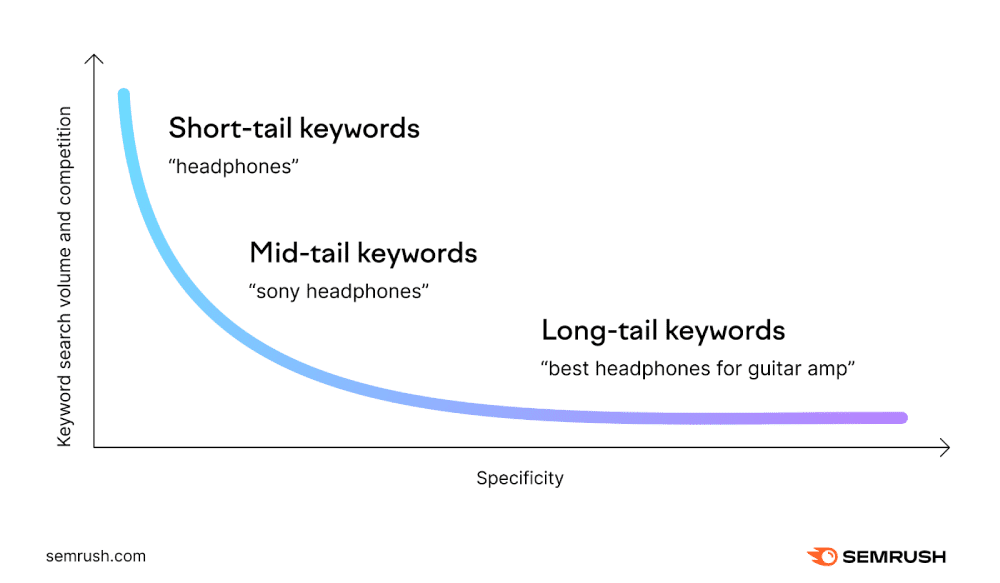
The term comes from the shape of a search demand curve. A few popular terms get massive volumes (the “head”), while countless specific phrases each get small amounts (the “long tail”).
Added together, these specific searches account for roughly 70% of all web searches.
| Search Phrase | Monthly Search Volume |
|---|---|
| plumber | 16,000 |
| emergency plumber north London | 70 |
| emergency plumber south London | 150 |
| emergency plumber croydon | 200 |
| emergency plumber harrow | 150 |
| Source: Ahrefs Dec 2025 |
Head Terms vs Long-Tail Keywords
A search for “accountant” could mean anything. The person might want a definition, be researching careers, or looking for local services.
A search for “self-employed accountant for contractors Leeds” tells you precisely what they want. They’re a contractor needing an accountant who understands self-employment, and they’re in Leeds.
If that’s your service, you’ve found a potential customer.
Why Long-Tail Keywords Matter for Small Businesses
For small businesses with limited budgets and time, long-tail keywords offer genuine advantages.
Less Competition, Better Chances
Large companies have the resources to compete for “shoes” or “accountant”. But not all will go after specific variations.
This creates opportunities.
While ranking for “plumber” might be impossible, appearing for “underfloor heating installation Harrogate” becomes achievable. You’re competing against fewer websites, and often they haven’t optimised as well as you could.
Higher Quality Visitors
People using specific phrases typically know what they want. Someone searching “cheap laptops” is browsing. Someone searching “refurbished ThinkPad X1 Carbon UK warranty” is ready to buy.
Research suggests that these long-tail visitors convert at around two and a half times the rate of generic search visitors.
Long-tail keywords work well for SEO. They’re easier to rank for than popular terms, they bring visitors who actually want what you offer, and when you target several of them, the traffic adds up. They also help you appear in AI-generated answers from tools like ChatGPT and Google’s AI Overviews.
Real Examples of Long-Tail Keywords
For an accountant, “accountant” is too broad. Better options include “tax return help for eBay sellers UK” or “making tax digital accountant for sole traders Bristol”.
A builder might struggle with “builder” but could target “garage conversion building regulations Surrey” or “damp proof course specialist older properties”.
An online retailer can’t compete for “shoes” but might rank for “wide fit waterproof walking boots women UK size 8”. People searching this phrase are ready to buy.
How to Find Long-Tail Keywords for Your Business
You don’t need expensive software. Several free approaches work well.
Start With What Customers Ask
Your existing customers are your best source. Think about questions people ask when they contact you, problems they describe, and specific requests they make. These translate directly into keywords people are probably searching.
Free Tools You Can Use
Google’s autocomplete reveals real searches. Start typing your service into Google and watch suggestions appear. These come from actual searches people make.
The “People also ask” boxes in search results show related questions. These make excellent starting points for question-based long-tail keywords.
AnswerThePublic generates questions people ask about any topic. Enter your main service and you’ll see dozens of phrases to consider.
Check Your Competition
Look at smaller competitors who appear in search results for specific terms.
- What phrases appear in their page titles?
- What questions do they answer?
- What types of guides do they have?
You’re not copying their content, but understanding which phrases help similar businesses get found.
Local Keyword Research: How to Find the Right Keywords for Your Area

How to Use Long-Tail Keywords on Your Website
Create dedicated pages or blog posts for specific phrases. If you’re targeting “emergency boiler repair Croydon”, write a page that actually helps someone in Croydon with a broken boiler.
Explain your service area, availability, and what to do while waiting.
Use your target phrase naturally in the page title, main heading, and content. But write for people first. Google rewards pages that genuinely answer questions over pages stuffed with keywords.
Focus each page on one primary long-tail keyword. Trying to target too many phrases on one page dilutes your focus.
Common Mistakes to Avoid
Don’t abandon the high traffic head terms completely. A balanced approach includes broader terms alongside specific targets.
Don’t target phrases that nobody searches for. Check that real demand exists before creating content.
Don’t create thin, unhelpful content just to target a keyword. If your page doesn’t help someone who searched that phrase, they’ll leave immediately and Google notices.
Getting Started
Long-tail keywords give small businesses a genuine opportunity to compete. While big companies can afford to chase high-volume terms, you can build traffic from specific searches where you can realistically appear on page one.
Start simple.
Type your main service into Google and note what autocomplete suggests. Look at “People also ask” questions. Think about what customers actually ask you. These give you a starting point for content that could bring new customers to your website.
Frequently Asked Questions
Long-tail keywords typically contain more than three words, though some can be longer. The key characteristic isn’t word count but specificity. Focus on how specific the phrase is rather than hitting a particular word count.
Individual long-tail keywords usually bring modest traffic volume, often under 50-100 searches monthly. The strategy works through accumulation. Ten pages each bringing 50 visitors monthly gives you 500 well targeted monthly visitors who convert better than generic search traffic.
Check for actual search volume using Google Keyword Planner. Look at what currently ranks for the phrase. Consider whether someone searching it would be your ideal customer.
Results vary based on your website’s authority and competition. Some pages rank within weeks for low-competition phrases. Others take months. Expect three to six months as a reasonable timeframe.
Long-tail keywords work exceptionally well for local businesses because location naturally adds specificity. “Accountant for landlords Sheffield” combines service type, customer type, and location effectively.
Question-based keywords work particularly well because they indicate clear intent. Someone asking “how much does a loft conversion cost” wants specific information you can provide.
Yes. Service pages, FAQ sections, and product descriptions can all target long-tail keywords. However, blogs give flexibility to target informational queries that don’t fit your main site structure.
Yes. AI tools like ChatGPT and Google’s AI Overviews still draw from web content. Specific, helpful content targeting long-tail queries helps you appear in both traditional and AI-powered search results.
One primary focus per page works best. However, you can naturally include closely related variations. Google understands related concepts and may rank you for variations you didn’t explicitly target.